From 2-Star Ratings to 4.5
Rebuilding a FinTech product through engineering leadership
From 2-Star Ratings to 4.5
Rebuilding a FinTech product through engineering leadership
From 2-Star Ratings to 4.5
Rebuilding a FinTech product through engineering leadership
Industry
Industry
FinTech (B2C)
FinTech (B2C)
Company Size
Company Size
15+ Engineers across 4 product lines
15+ Engineers across 4 product lines
Engagement
Engagement
Fractional CTO
Fractional CTO
Duration
Duration
18+ months (ongoing)
18+ months (ongoing)
Platform
Platform
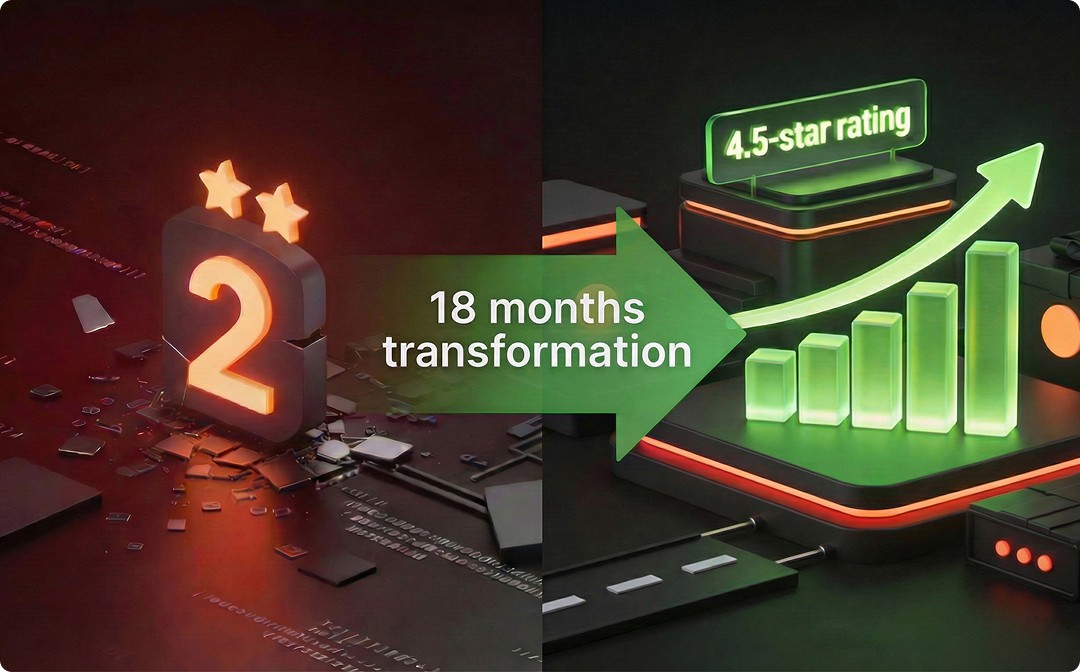
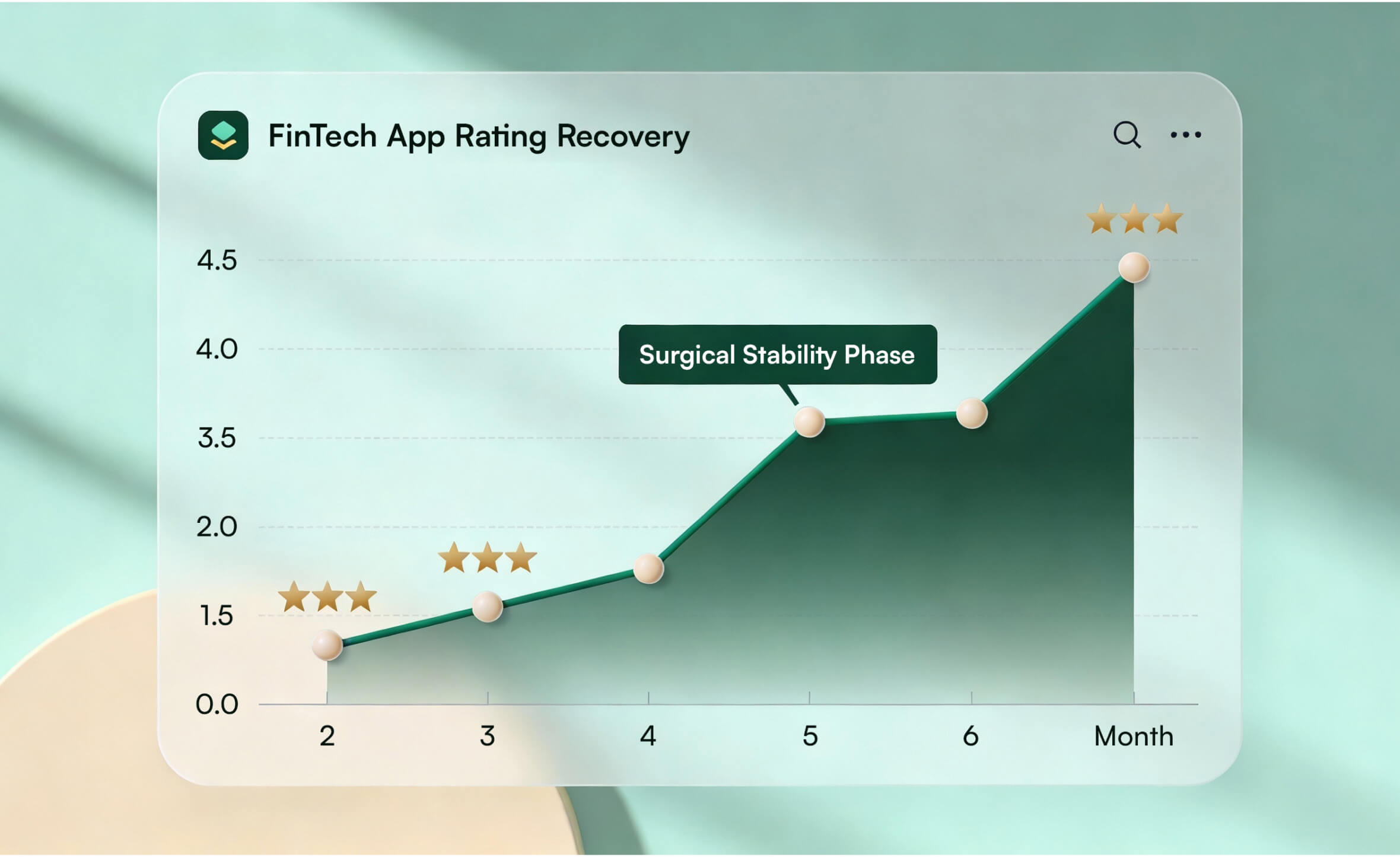
Product rating improved from 2/5 to 4.5/5 in 6 months
Product rating improved from 2/5 to 4.5/5 in 6 months
Services
Services
Technical Strategy
Engineering Leadership
Technical Roadmap
Tech Stack
Tech Stack
React Native
Node.js
AWS
CI/CD
The Challenge
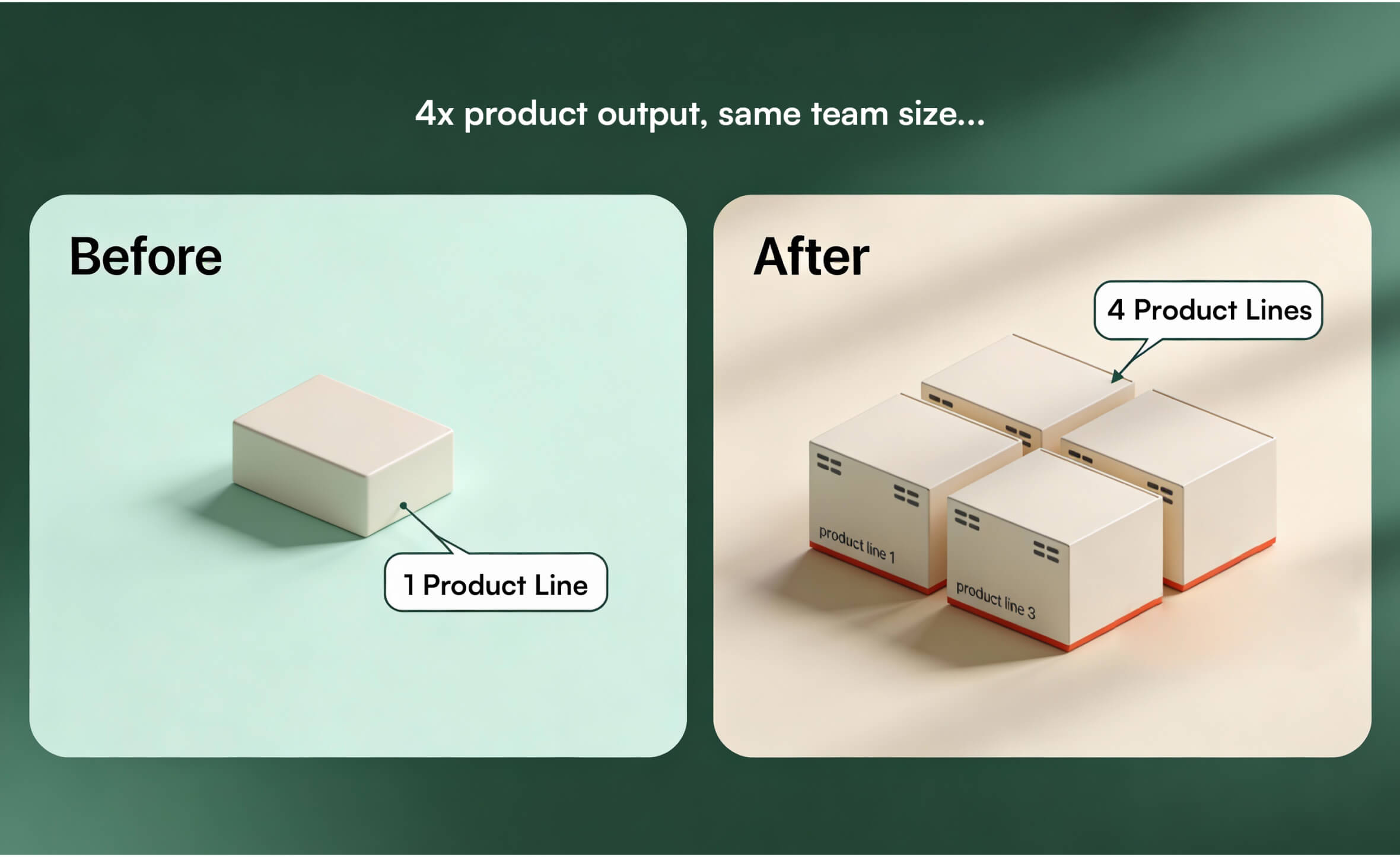
When we joined this FinTech company, they had just launched their flagship product. The app was live, but the reality was brutal: a 2-star rating in the app store and a backlog of stability issues that were eroding user trust. For a FinTech product, this is existential. When you handle people’s money, trust is everything. Users do not give second chances to apps that feel unreliable. The team had shipped fast to hit launch deadlines, but the technical debt was now compounding into a customer experience problem. The engineering team of 15 reported directly to the incoming Fractional CTO. There was no engineering management layer. The product had one live product line with three more in development. The challenge was clear: stabilise the core product while building the foundation for scale.
The Challenge
When we joined this FinTech company, they had just launched their flagship product. The app was live, but the reality was brutal: a 2-star rating in the app store and a backlog of stability issues that were eroding user trust. For a FinTech product, this is existential. When you handle people’s money, trust is everything. Users do not give second chances to apps that feel unreliable. The team had shipped fast to hit launch deadlines, but the technical debt was now compounding into a customer experience problem. The engineering team of 15 reported directly to the incoming Fractional CTO. There was no engineering management layer. The product had one live product line with three more in development. The challenge was clear: stabilise the core product while building the foundation for scale.
The Challenge
When we joined this FinTech company, they had just launched their flagship product. The app was live, but the reality was brutal: a 2-star rating in the app store and a backlog of stability issues that were eroding user trust. For a FinTech product, this is existential. When you handle people’s money, trust is everything. Users do not give second chances to apps that feel unreliable. The team had shipped fast to hit launch deadlines, but the technical debt was now compounding into a customer experience problem. The engineering team of 15 reported directly to the incoming Fractional CTO. There was no engineering management layer. The product had one live product line with three more in development. The challenge was clear: stabilise the core product while building the foundation for scale.
The Approach
Phase 1
Surgical Stability (Months 1-6)
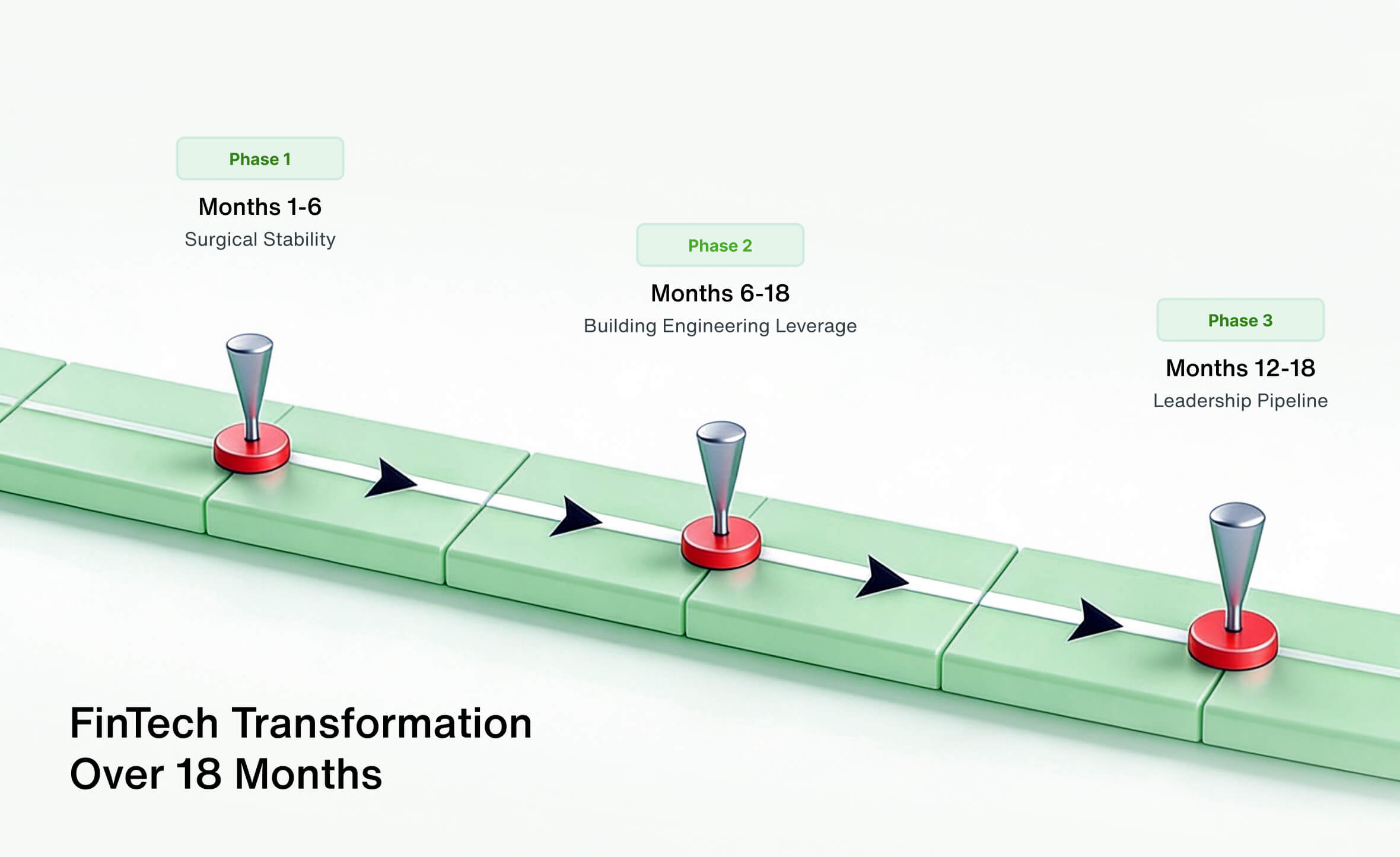
Rather than a broad “fix everything” mandate, we ran a precision strike. Working with the product manager, CEO, and ops director, we mapped every bug, usability issue, UX problem, and functionality gap that was dragging down ratings. The hiring philosophy was deliberate: a 1:3 ratio of senior to junior engineers. We brought in three senior engineers specifically to establish foundations across three critical areas - frontend architecture, backend services, and infrastructure. This was not about adding capacity; it was about embedding quality standards into the codebase. The cross-functional coordination was key. Design, product, engineering, and operations aligned on a single goal: knock out every issue affecting user trust within six months. We hit 4.5 stars within that window.
The Approach
Phase 1
Surgical Stability (Months 1-6)
Rather than a broad “fix everything” mandate, we ran a precision strike. Working with the product manager, CEO, and ops director, we mapped every bug, usability issue, UX problem, and functionality gap that was dragging down ratings. The hiring philosophy was deliberate: a 1:3 ratio of senior to junior engineers. We brought in three senior engineers specifically to establish foundations across three critical areas - frontend architecture, backend services, and infrastructure. This was not about adding capacity; it was about embedding quality standards into the codebase. The cross-functional coordination was key. Design, product, engineering, and operations aligned on a single goal: knock out every issue affecting user trust within six months. We hit 4.5 stars within that window.
The Approach
Phase 1
Surgical Stability (Months 1-6)
Rather than a broad “fix everything” mandate, we ran a precision strike. Working with the product manager, CEO, and ops director, we mapped every bug, usability issue, UX problem, and functionality gap that was dragging down ratings. The hiring philosophy was deliberate: a 1:3 ratio of senior to junior engineers. We brought in three senior engineers specifically to establish foundations across three critical areas - frontend architecture, backend services, and infrastructure. This was not about adding capacity; it was about embedding quality standards into the codebase. The cross-functional coordination was key. Design, product, engineering, and operations aligned on a single goal: knock out every issue affecting user trust within six months. We hit 4.5 stars within that window.
Phase 2
Building Engineering Leverage (Months 6-18)
With stability restored, the focus shifted to building a team that could scale without the Fractional CTO being in every conversation.
1. The 80/20 mentoring model
We identified that one engineer, Rusiru, had a distinctive approach - 80% planning, 20% execution. His features consistently passed QA with minimal rework because he documented solutions thoroughly before writing code. When issues arose, he could diagnose them immediately because he understood his own solution architecture.
We paired him with Gathsara, a talented but code-first engineer who would write, delete, rewrite repeatedly. After a three-month mentorship programme, Gathsara transformed his approach. Six months later, Rusiru himself said Gathsara had surpassed him. That is the compound return on structured mentorship.
2. Deliberate cross-training
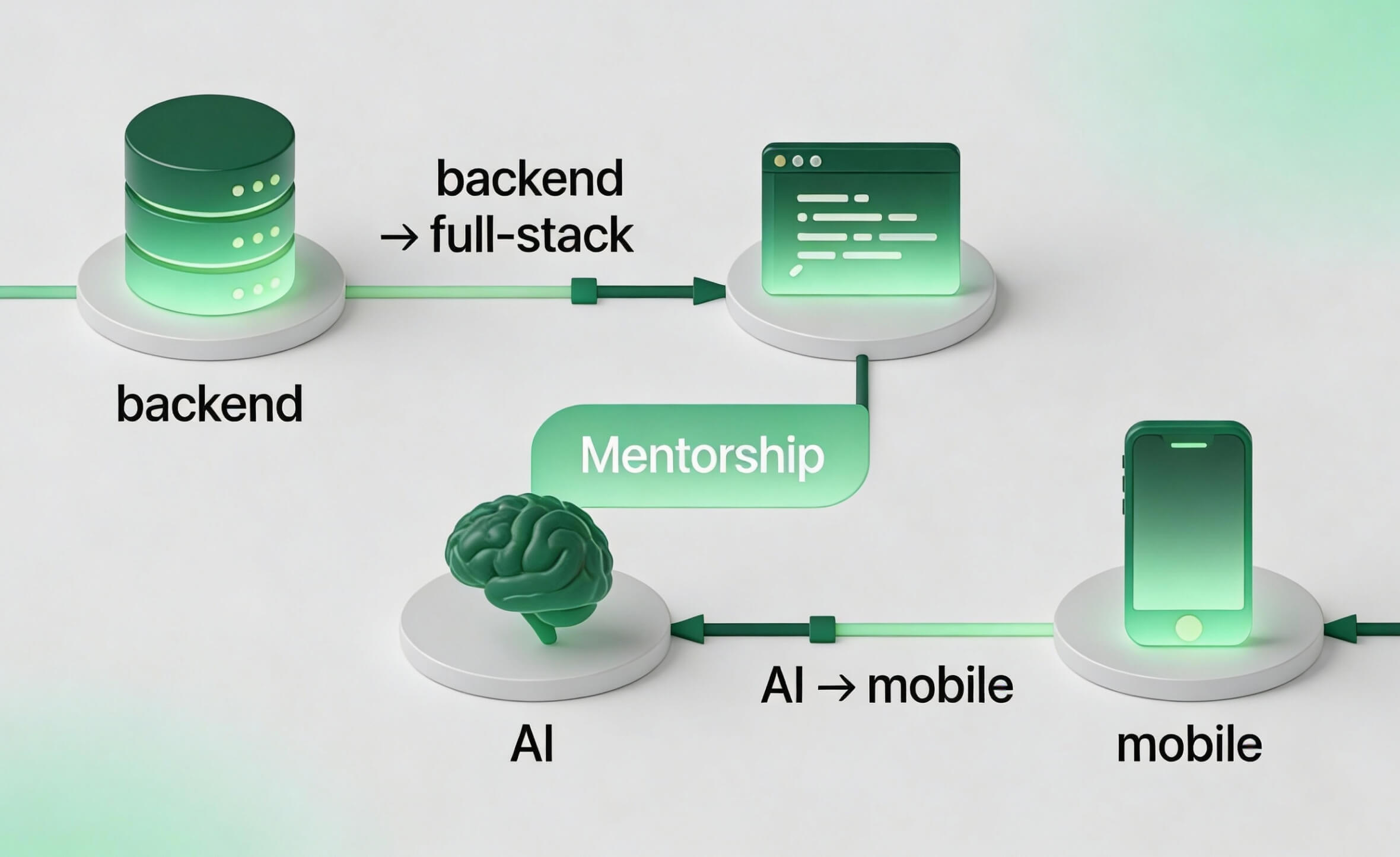
Instead of hiring to fill gaps, we challenged existing engineers to expand. Gathsara moved from pure backend to full-stack, supported by AI development tools like Cursor. Rusiru went from backend to AI engineering (through a paid external course with a knowledge-sharing requirement) and then to mobile development when we had a resourcing gap.
3. The philosophy
Push engineers into their learning zone, provide the right support and tooling, and let them expand their comfort zone permanently.
Phase 2
Building Engineering Leverage (Months 6-18)
With stability restored, the focus shifted to building a team that could scale without the Fractional CTO being in every conversation.
1. The 80/20 mentoring model
We identified that one engineer, Rusiru, had a distinctive approach - 80% planning, 20% execution. His features consistently passed QA with minimal rework because he documented solutions thoroughly before writing code. When issues arose, he could diagnose them immediately because he understood his own solution architecture.
We paired him with Gathsara, a talented but code-first engineer who would write, delete, rewrite repeatedly. After a three-month mentorship programme, Gathsara transformed his approach. Six months later, Rusiru himself said Gathsara had surpassed him. That is the compound return on structured mentorship.
2. Deliberate cross-training
Instead of hiring to fill gaps, we challenged existing engineers to expand. Gathsara moved from pure backend to full-stack, supported by AI development tools like Cursor. Rusiru went from backend to AI engineering (through a paid external course with a knowledge-sharing requirement) and then to mobile development when we had a resourcing gap.
3. The philosophy
Push engineers into their learning zone, provide the right support and tooling, and let them expand their comfort zone permanently.
Phase 2
Building Engineering Leverage (Months 6-18)
With stability restored, the focus shifted to building a team that could scale without the Fractional CTO being in every conversation.
1. The 80/20 mentoring model
We identified that one engineer, Rusiru, had a distinctive approach - 80% planning, 20% execution. His features consistently passed QA with minimal rework because he documented solutions thoroughly before writing code. When issues arose, he could diagnose them immediately because he understood his own solution architecture.
We paired him with Gathsara, a talented but code-first engineer who would write, delete, rewrite repeatedly. After a three-month mentorship programme, Gathsara transformed his approach. Six months later, Rusiru himself said Gathsara had surpassed him. That is the compound return on structured mentorship.
2. Deliberate cross-training
Instead of hiring to fill gaps, we challenged existing engineers to expand. Gathsara moved from pure backend to full-stack, supported by AI development tools like Cursor. Rusiru went from backend to AI engineering (through a paid external course with a knowledge-sharing requirement) and then to mobile development when we had a resourcing gap.
3. The philosophy
Push engineers into their learning zone, provide the right support and tooling, and let them expand their comfort zone permanently.
Phase 3
Leadership Pipeline (Months 12-18)
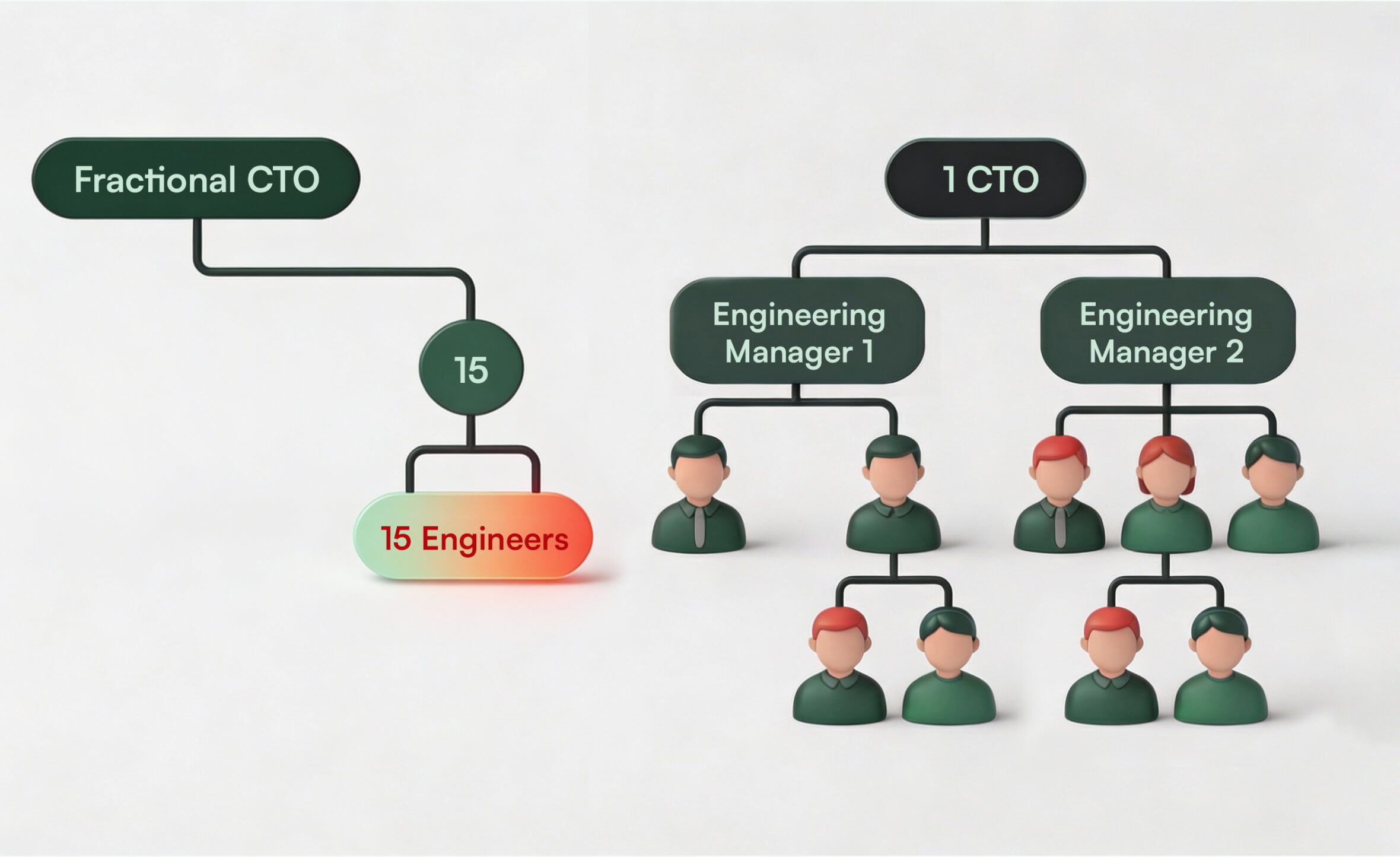
The final phase was removing the Fractional CTO from day-to-day operations. We identified and promoted two engineering managers: 1. Tashila: Promoted to manage two of the four product lines 2. Hernan: Hired for his traditional banking and FinTech experience, bringing a different perspective on how financial software should be built, then promoted to engineering manager The reporting structure moved from 15 direct reports to 3, freeing the Fractional CTO to work with the COO on the 2-3 year strategic roadmap.
Phase 3
Leadership Pipeline (Months 12-18)
The final phase was removing the Fractional CTO from day-to-day operations. We identified and promoted two engineering managers: 1. Tashila: Promoted to manage two of the four product lines 2. Hernan: Hired for his traditional banking and FinTech experience, bringing a different perspective on how financial software should be built, then promoted to engineering manager The reporting structure moved from 15 direct reports to 3, freeing the Fractional CTO to work with the COO on the 2-3 year strategic roadmap.
Phase 3
Leadership Pipeline (Months 12-18)
The final phase was removing the Fractional CTO from day-to-day operations. We identified and promoted two engineering managers: 1. Tashila: Promoted to manage two of the four product lines 2. Hernan: Hired for his traditional banking and FinTech experience, bringing a different perspective on how financial software should be built, then promoted to engineering manager The reporting structure moved from 15 direct reports to 3, freeing the Fractional CTO to work with the COO on the 2-3 year strategic roadmap.
The Results
Product rating
Product rating
Product rating
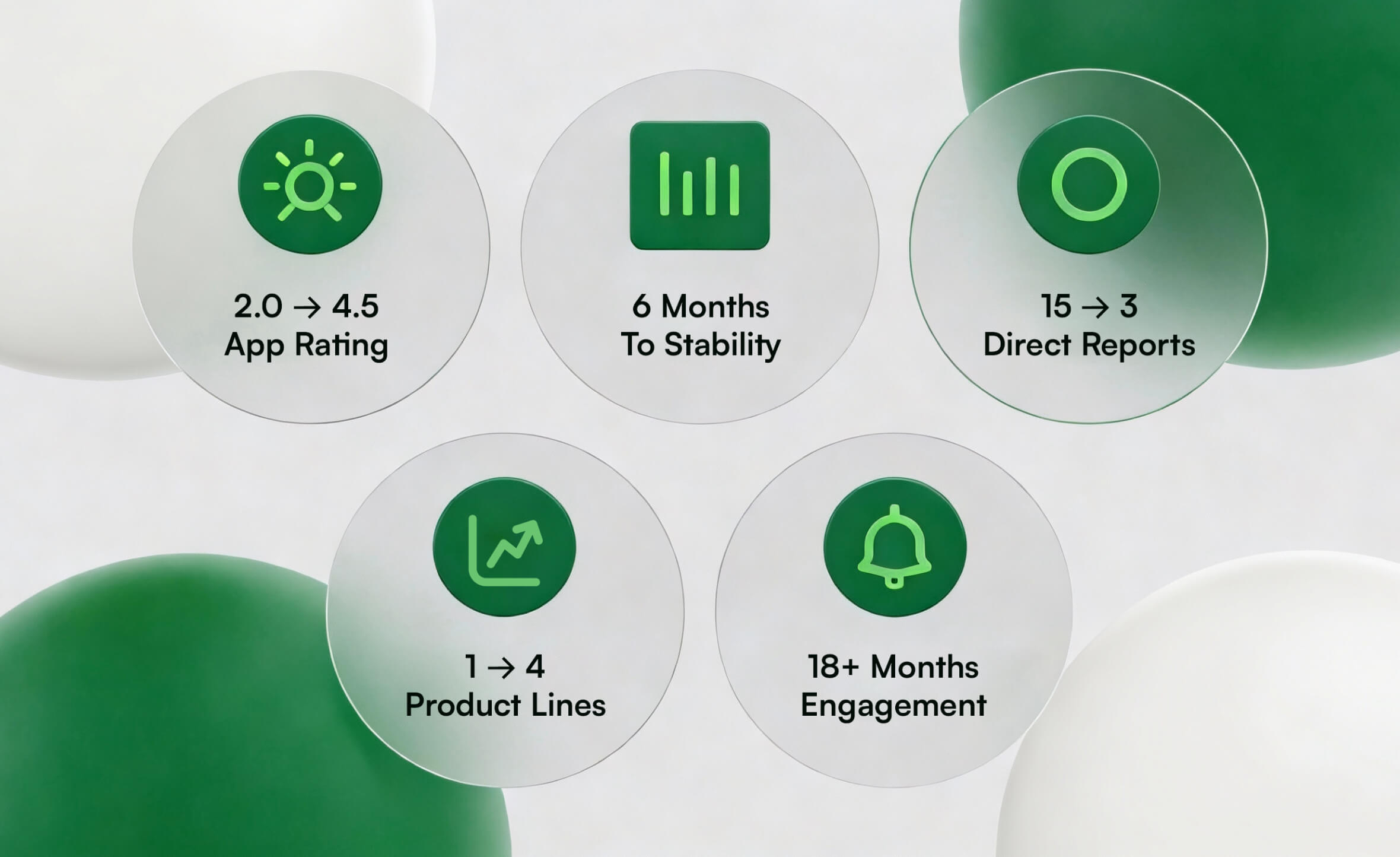
2/5 to 4.5/5 in 6 months
2/5 to 4.5/5 in 6 months
2/5 to 4.5/5 in 6 months
Team structure
Team structure
Team structure
Built engineering management layer (2 EMs promoted)
Built engineering management layer (2 EMs promoted)
Built engineering management layer (2 EMs promoted)
Product expansion
Product expansion
Product expansion
Scaled from 1 to 4 product lines with same core team
Scaled from 1 to 4 product lines with same core team
Scaled from 1 to 4 product lines with same core team
Engineer development
Engineer development
Engineer development
Multiple engineers cross-trained across backend, frontend, mobile, and AI
Multiple engineers cross-trained across backend, frontend, mobile, and AI
Multiple engineers cross-trained across backend, frontend, mobile, and AI
CTO transition
CTO transition
CTO transition
Moved from 15 direct reports to 3, enabling strategic focus
Moved from 15 direct reports to 3, enabling strategic focus
Moved from 15 direct reports to 3, enabling strategic focus
Key Takeaways
Stability before scale
Stability before scale
Stability before scale
The temptation with a struggling product is to add features to win back users. Wrong move. We focused entirely on stability for six months. Features mean nothing if users do not trust the foundation.
The temptation with a struggling product is to add features to win back users. Wrong move. We focused entirely on stability for six months. Features mean nothing if users do not trust the foundation.
The temptation with a struggling product is to add features to win back users. Wrong move. We focused entirely on stability for six months. Features mean nothing if users do not trust the foundation.
Hire for ratios, not just roles
Hire for ratios, not just roles
Hire for ratios, not just roles
A 1:3 senior-to-junior ratio is not arbitrary. Senior engineers set quality standards that juniors absorb through code review, pairing, and mentorship. Without that ratio, you are just adding capacity without capability.
A 1:3 senior-to-junior ratio is not arbitrary. Senior engineers set quality standards that juniors absorb through code review, pairing, and mentorship. Without that ratio, you are just adding capacity without capability.
A 1:3 senior-to-junior ratio is not arbitrary. Senior engineers set quality standards that juniors absorb through code review, pairing, and mentorship. Without that ratio, you are just adding capacity without capability.
Cross-training beats hiring for every gap
Cross-training beats hiring for every gap
Cross-training beats hiring for every gap
When we needed mobile capacity, we did not hire. We challenged a backend engineer, gave him the right tools, and watched him deliver. This builds resilient teams and engineers who understand the full system.
When we needed mobile capacity, we did not hire. We challenged a backend engineer, gave him the right tools, and watched him deliver. This builds resilient teams and engineers who understand the full system.
When we needed mobile capacity, we did not hire. We challenged a backend engineer, gave him the right tools, and watched him deliver. This builds resilient teams and engineers who understand the full system.
The Fractional CTO's job
The Fractional CTO's job
The Fractional CTO's job
Day-to-day involvement is a phase, not a destination. Building a leadership pipeline means the company gets more strategic value while reducing single-point-of-failure risk.
Day-to-day involvement is a phase, not a destination. Building a leadership pipeline means the company gets more strategic value while reducing single-point-of-failure risk.
Day-to-day involvement is a phase, not a destination. Building a leadership pipeline means the company gets more strategic value while reducing single-point-of-failure risk.
Client Context
Series A FinTech company operating in a regulated B2C financial services space. The engagement began post-launch when product quality issues threatened market traction. The Fractional CTO model allowed them to access senior technical leadership without the commitment of a full-time executive hire, while building internal capability for long-term independence. Suitable for: CTOs evaluating fractional leadership models, founders navigating post-launch product challenges, engineering leaders looking to build mentorship and cross-training programmes.
Client Context
Series A FinTech company operating in a regulated B2C financial services space. The engagement began post-launch when product quality issues threatened market traction. The Fractional CTO model allowed them to access senior technical leadership without the commitment of a full-time executive hire, while building internal capability for long-term independence. Suitable for: CTOs evaluating fractional leadership models, founders navigating post-launch product challenges, engineering leaders looking to build mentorship and cross-training programmes.
Client Context
Series A FinTech company operating in a regulated B2C financial services space. The engagement began post-launch when product quality issues threatened market traction. The Fractional CTO model allowed them to access senior technical leadership without the commitment of a full-time executive hire, while building internal capability for long-term independence. Suitable for: CTOs evaluating fractional leadership models, founders navigating post-launch product challenges, engineering leaders looking to build mentorship and cross-training programmes.
See More Case Studies
See how we turn bold ideas into fast, reliable, and scalable digital products.


See More Case Studies
See how we turn bold ideas into fast, reliable, and scalable digital products.
See More Case Studies
See how we turn bold ideas into fast, reliable, and scalable digital products.
Your Next Big Product Starts Here
Work with a team that designs, builds, and ships digital products — fast, scalable, and user-first.

Your Next Big Product Starts Here
Work with a team that designs, builds, and ships digital products — fast, scalable, and user-first.
Your Next Big Product Starts Here
Work with a team that designs, builds, and ships digital products — fast, scalable, and user-first.